
REVIEW · SORRENTO
Explore and Experience Pompeii
Pompeii feels close with the right guide. This private English walk through Pompeii Archaeological Park is designed to get you from seeing ruins to actually understanding how people lived there, with a skip-the-line start and a focused route through the most meaningful spots.
What I like most is the way the guide turns the park into a story you can read on your own. You spend time on the details that usually get missed, like graffiti, symbols, and the clues in houses and public spaces that show daily routines, rituals, and even what people did for fun. The one real drawback to plan for: entrance tickets to the Archaeological Park are not included, so you’ll need to pay that separately before you go.
Key Highlights You’ll Notice Fast
- Skip-the-line entry so you lose less time waiting at the start of your visit
- A tight 2-hour route that hits streets, squares, houses, and the themes behind them
- Graffiti and symbols explained so you know what you’re looking at instead of just guessing
- Everyday life focus, from spare time and popular places to food and rituals
- Theatrical performances are part of the story, not an afterthought
- Private group format (up to 10) with your own guide service
Pompeii Archaeological Park, with a Skip-the-Line Start
Pompeii can be overwhelming in the best way. You step into a huge archaeological park where everything looks important, and you quickly realize that random wandering can leave you with a lot of photos and not much understanding.
This tour solves that by starting you efficiently. The guide gets you through the opening phase faster, then leads your group into the park with purpose. You’re not racing. You’re getting your bearings early, so the next 2 hours actually make the site click.
The private setup matters too. With a group limited to up to 10 people, the guide can keep the pace human and adjust to questions without turning your visit into a long, noisy march. And because it’s offered in English, you’re not relying on translation apps to figure out what matters on the ground.
If you’re visiting Pompeii as a highlight day, this kind of start can save you from the classic problem: spending hours looking at the stones instead of learning the human story.
The 2-Hour Walk: What You’ll See and Why It Matters
The heart of this experience is a guided walk through Pompeii Archaeological Park, about 2 hours. That time is short enough to feel doable, but structured enough to guide you past the stuff that often turns into dead ends.
The route focuses on places that connect to how Pompeian society worked day to day. You’ll be walking through streets and key areas while the guide ties them to themes like everyday life, popular gathering spots, and the routines people built into normal days.
A big part of the value here is that the tour isn’t just listing monuments. It’s answering the questions you should be asking in Pompeii, like:
- Where did daily life happen?
- What did people eat?
- What did they do in their spare time?
- Where did rituals show up in daily behavior?
You also get time to notice the visual language of the site. Pompeii has a way of shouting its personality through everyday marks, like writing on walls and symbolic decoration. The guide helps you interpret what you’re seeing, so you don’t walk by without understanding.
One more practical point: the tour includes guide service, but it explicitly does not include admission tickets. So you should budget for the entry fee on top of the tour price and make sure you have what you need before you meet.
Reading Pompeii: Graffiti, Symbols, and Faces
Pompeii isn’t only temples and theaters. It’s homes, corners, public spaces, and the small human marks that survived. This tour leans hard into that idea, especially through graffiti and symbols.
Graffiti might sound like a “bonus” topic until you realize how useful it is for learning how people talked, advertised, joked, warned, and expressed identity. In a city like Pompeii, that street-level communication is part of the social fabric.
Symbols work the same way. They can point you toward beliefs, habits, or the meanings people assigned to spaces. When you understand the symbols the guide is pointing out, the ruins start to feel less like random fragments and more like a functioning, lived-in environment.
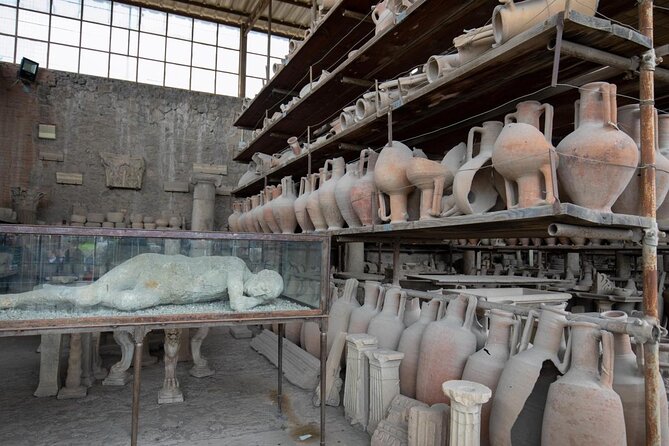
The guide also references how advanced techniques have allowed modern viewers to understand details on the remains, including faces. I wouldn’t expect this to be a science lecture. It’s more about helping you connect what you see now to what researchers can infer from the evidence.
That combination, street writing plus visual meaning, is what makes this kind of guided visit so useful. Without it, you can spend a whole day collecting impressions and still feel like you missed the point.
Houses, Squares, and Everyday Life in Pompeii
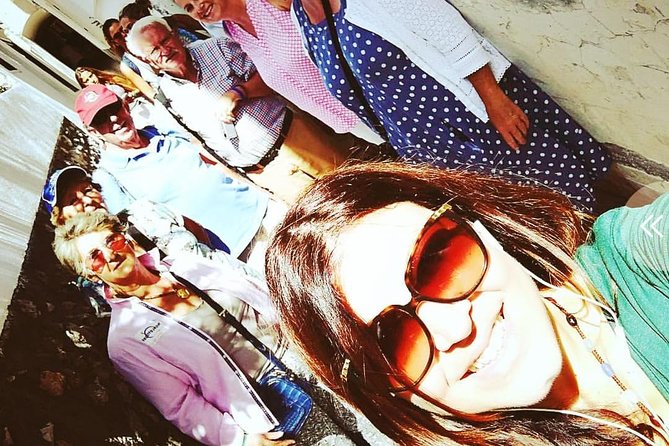
Pompeii is famous for its architecture, but the real magic is the way the layout shapes behavior. A house is not just walls, and a square is not just open space. They’re part of the social engine.
On this tour, you’ll explore houses and squares and learn how those places likely worked in daily life. You’ll get context for how people moved around, where activities clustered, and how public and private space blended in ways that might surprise you.
You’ll also be guided through the “how did they live” angle: the guide discusses rituals and daily routines, and frames what you see as a practical system, not a museum display.
This matters because Pompeii can trick you. It’s easy to treat it like a still-life. A good guide helps you imagine the rhythm that once animated these spaces. Even if you only grasp a few key patterns, it changes how you read everything else in the park that you explore afterward.
Theatrical Performances: More Than a Stop on a Map
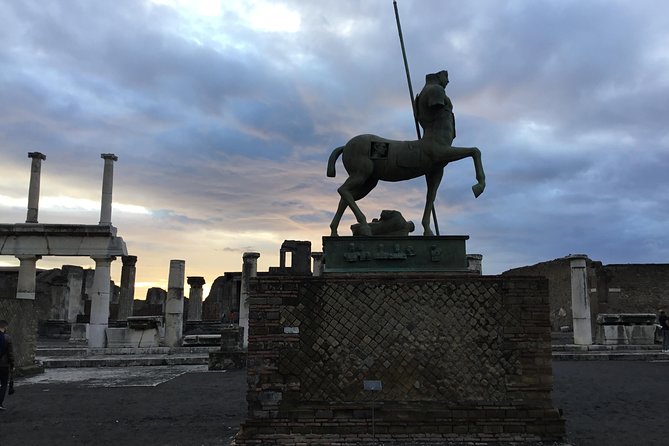
Pompeii had entertainment, and entertainment shaped community life. This tour includes theatrical performances as part of what you learn and where you walk.
That might not sound like the most obvious draw when you’re standing in a ruin, but it’s actually a smart approach. Entertainment is a window into what people valued, how crowds formed, and what kind of storytelling mattered to them.
When the guide connects performance spaces to everyday life, you get more than a label. You get a sense of why the site included those spaces at all and how people used them.
If you’re the type who likes your historical sites with human context, this is where the tour earns its time. You leave with a different kind of mental map. Not just where things are, but why they exist in the first place.
Practical Value: Pricing, Duration, and What You Get

Let’s talk value in plain terms.
You’re paying $240.28 per group (up to 10) for about 2 hours of guided service. Entrance tickets are not included. That means your total cost depends on how many people are in your group and the price of admission for your dates.
So how is that value? For a small group, it can be a strong deal compared to per-person pricing, because you’re buying focused guidance rather than paying a premium for a longer, slower tour. And because it’s private, you’re not stuck in a rigid schedule that ignores your questions.
This setup is also efficient. Pompeii is large, and a guided start can prevent wasted time. If you want to see key areas and understand them enough to keep exploring afterward, paying for a guided structure is often smarter than trying to DIY everything with guesswork.
The tour being mobile-ticket friendly is convenient too. You’re not scrambling for paper confirmations.
Finally, note that it’s commonly booked about 89 days in advance on average. That’s a hint of popularity. If your schedule is fixed, don’t assume you can wing it last minute.
Where You Meet and How the Timing Works
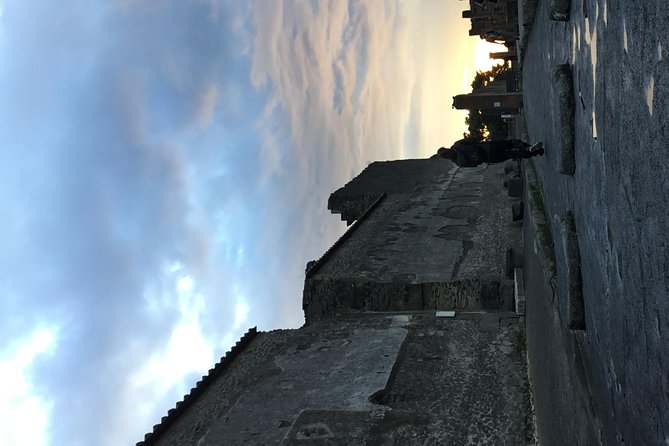
You meet at Piazza Esedra, 80045 Pompei NA, Italy. The activity ends back at the meeting point, so you’re not dealing with transfers across the city at the end.
Because the meeting spot is near public transportation, it’s easier to stitch this into a broader itinerary in the Pompeii area. If you’re coming from Naples or Sorrento, you’ll likely appreciate not needing another complicated logistics puzzle after the tour.
The tour runs for about 2 hours, so it fits well as a half-day anchor. You can plan a slower meal afterward or pair it with another nearby stop, as long as you give yourself time to navigate entry lines and crowds before your guide starts.
Who This Tour Is Best For (and Who Might Skip It)
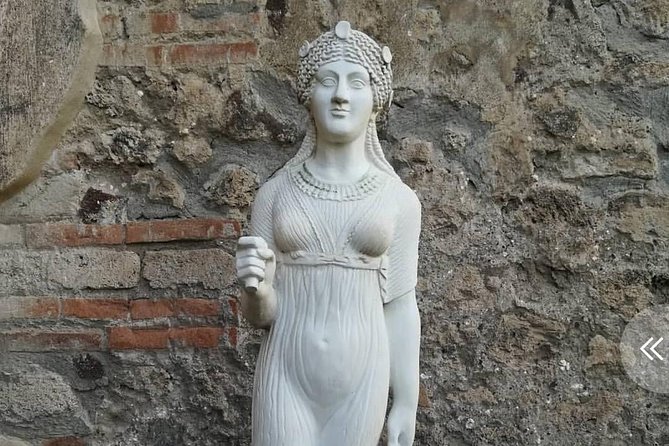
This experience is described as suitable for most travelers, and the format makes it especially friendly for groups who want guidance without spending the entire day in a museum-like rhythm.
It’s a great fit if:
- You want a clear framework for Pompeii rather than random wandering
- You love learning from details, like graffiti and symbols
- You’re traveling in a small group and want private attention
- You plan to explore more on your own after the guided portion
It might not be your best match if:
- You prefer long, slow visits with lots of solo time and minimal structure
- You dislike tours that have a defined 2-hour rhythm
- You’re trying to minimize all extra costs, since admission tickets are separate
If you’re visiting Pompeii for the first time and want the ruins to feel human, this is the kind of tour that helps you feel oriented quickly.
Should You Book This Pompeii Guided Walk?
I’d book it if your goal is to understand Pompeii, not just see it. The guided focus on everyday life, the attention to graffiti and symbols, and the inclusion of houses, squares, and performance spaces makes the 2 hours feel purposeful.
Choose it over a generic tour if you like your history grounded in daily behavior, not only big monuments. The skip-the-line start is also a practical win in a place where waiting can eat your energy.
Just do one thing up front: plan your budget with the missing admission ticket in mind. Once you account for entry fees, this can be a smart way to turn Pompeii into a story you can actually read.
FAQ
How long is the Pompeii tour?
It’s about 2 hours.
Is the Pompeii tour in English?
Yes, the tour is offered in English.
Is the entrance ticket included?
No, entrance tickets to the Archaeological Park are not included.
What is the price and group size?
The price is $240.28 per group, up to 10 people.
Is this a private tour?
Yes, it’s private, and only your group participates.
Where do I meet the guide?
You meet at Piazza Esedra, 80045 Pompei NA, Italy.
Do I get a mobile ticket?
Yes, you’ll receive a mobile ticket.
Is it easy to reach the meeting point by public transport?
The meeting point is near public transportation.
What is the cancellation policy?
You can cancel for a full refund up to 24 hours before the experience starts.
More Tour Reviews in Pompeii
- Pompeii Small Group Tour with an Archaeologist★ 5.0 · 6,593 reviews
- Discover the Ancient Ruins of Pompeii: Day Trip from Rome★ 3.5 · 2,247 reviews
- Pompeii and Herculaneum Small Group Tour with an Archaeologist★ 5.0 · 1,350 reviews
- Skip the Line Guided Tour of Pompeii led by an Archaeologist★ 5.0 · 703 reviews
- Pompeii Ticket + Tour with Optional Tasting Experience at Pompeii★ 5.0 · 663 reviews