
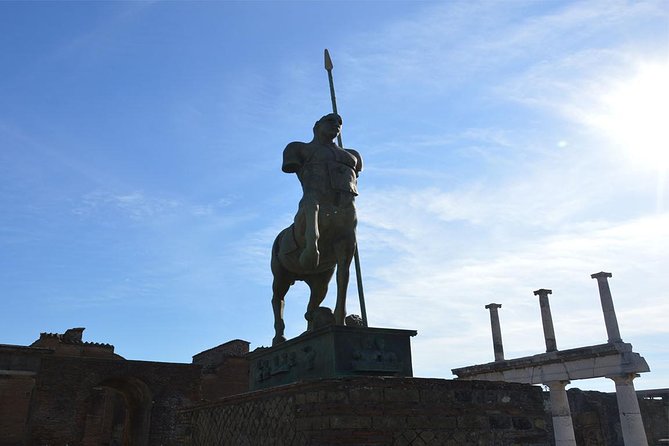
REVIEW · SORRENTO
Ancient Pompei in the afternoon
Afternoon ruins can feel like you found Pompeii’s off switch. This small-group walk lets you see major sights in the Pompeii Archaeological Park after the morning rush, and the late start can mean more comfortable temperatures and a calmer pace. I particularly like the chance to cover key areas like the Forum and street sites without feeling trapped in a crowd, and I also like how the guide, Glauco Messina, keeps the facts readable for different interests. One drawback to plan for: admission tickets are not included, so you’ll need to buy those separately.
You meet in Pompeii’s center at Piazza Immacolata and finish at Piazza Porta Marina, which is handy if you want to keep exploring afterward. The tour runs about 2 hours (approx.), and you’ll be walking the highlights rather than lingering in museums. If you’re expecting long photo stops or a slow, sit-down pace, this may feel a bit brisk.
Key things to know before you go
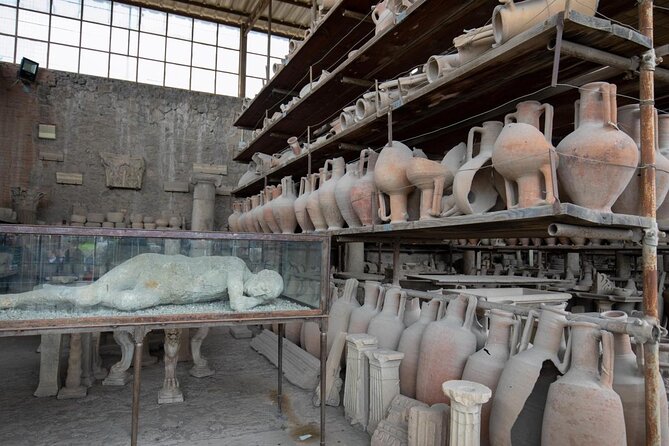
- Late-day timing for a calmer Pompeii: you start at 3:30 pm to dodge the heaviest morning crowds
- Small group size: maximum 10 travelers for a more personal experience
- English guidance by Glauco Messina: explanations that click for adults and teens
- Big highlights in one route: gymnasium, amphitheater, Thermopolium, Public Spa, Forum, and more
- Tickets sold separately: you’ll need your own admission before you enter
Afternoon in Pompeii, starting at 3:30 pm
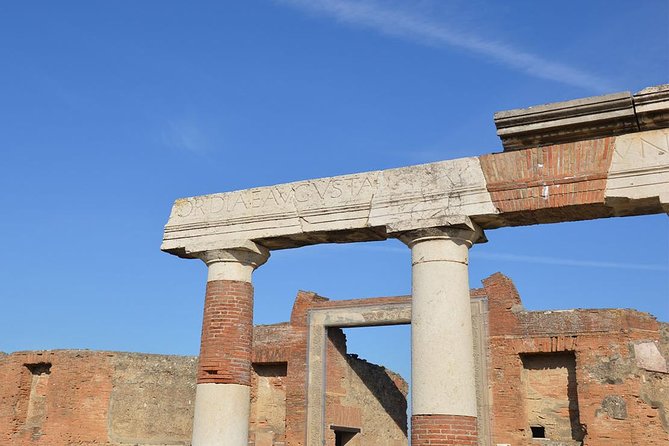
Pompeii can be a full-on sensory event. The morning crowd builds fast, and it can turn your walk into a slow shuffle rather than a story you’re following. An afternoon start helps you regain control of your pace, and it often brings more comfortable weather later in the day.
This tour leans into that timing on purpose. You get to walk through major areas of the site while the atmosphere is less frantic, and you still hit the core ruins that most people come for. The result is easier conversation with your guide, more chances to take photos without shoulder-to-shoulder pressure, and time to absorb what you’re seeing.
I also like that this isn’t billed as a long marathon. Expect a concentrated visit that prioritizes the places with the clearest clues about daily life, public space, and civic power.
Piazza Immacolata to Piazza Porta Marina: your practical route
The day starts at Piazza Immacolata, in Pompeii (80045). Your start time is 3:30 pm, and you’ll meet at the ticket redemption point there. The tour ends at Piazza Porta Marina, also in Pompeii (80045).
That start-to-finish flow matters more than people think. Finishing near Porta Marina can save you time figuring out how to get moving after your guided walk, especially if you want to continue sightseeing on your own. It also means you’re not retracing every step back to the first meeting point.
Plan to show up with enough buffer to find the group. You’ll have confirmation at booking, and it helps to go in knowing the exact spot so you don’t waste the first part of your tour searching around the square.
The Pompeii Archaeological Park walk: gymnasium and amphitheater
Once you’re inside the Pompeii Archaeological Park, the route starts with some of the city’s “work hard and show up” energy. You’ll see the Gymnasium and the Amphitheater, two sites that connect to how Pompeiians trained, competed, gathered, and watched public events.
The gymnasium is a great starting anchor because it sets a theme early. Even if you’re not a “sports history” person, a gymnasium helps you picture routine, exercise culture, and the idea of public life happening in shared spaces. It also gives your guide something to connect to later, because the amphitheater follows that “public performance” thread.
Then comes the amphitheater, where you can read Pompeii like a stage set. This is where explanations about crowds, spectacle, and architecture usually land best. If you like understanding how people moved and gathered, these two stops are a strong pair.
One watch-out: the amphitheater area involves uneven terrain typical of archaeological sites. Comfortable shoes matter, because you’ll be walking and repositioning for views.
Abundance Road and tavern stops: everyday life in the city
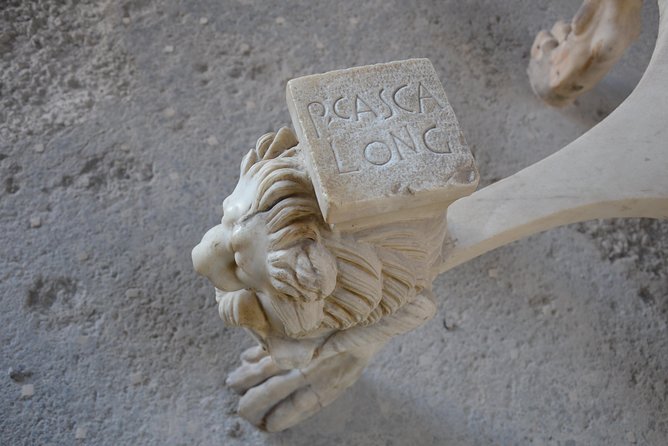
Next, you’ll head along Abundance road, plus a Tavern stop, where the focus shifts from public space to street-level reality. This is the part of Pompeii that tends to feel most relatable because it connects to places where people would have eaten, met, and handled the day.
An easy way to appreciate these stops is to think in rhythms. Public places show how people organized their lives around events. Streets and taverns show how people organized their hours around food, conversation, and small transactions.
The guided format helps here. A good guide doesn’t just point out stones, they connect the layout to what life likely looked like. With Glauco Messina, the tone stays lively, and the explanations are tailored enough to hold attention even for younger visitors.
You’ll also be walking a route where you can see how different parts of the city relate to each other. That’s one of the key advantages of a guided loop rather than wandering randomly on your own.
Thermopolium and the Public Spa: meals and water habits
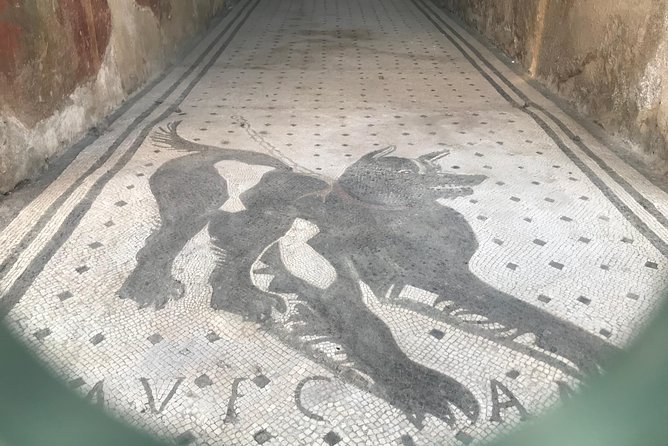
Two of the most useful stops on this route are the Thermopolium and the Public Spa. These places are powerful because they’re not vague symbols. They point to practical needs: hot food and communal routines.
A thermopolium is where you can picture quick meals and prepared food. It helps you understand Pompeii as a real city with real habits, not just a collection of impressive ruins. Your guide can also help you connect what you see to how people ate in everyday life.
Then the Public Spa shifts the story to hygiene and social time. Spas were about more than cleanliness. They were places to gather, share news, and spend time. When you pair that with the thermopolium, you get a clearer sense of how a day might flow, from eating to bathing and chatting.
This is also where you’ll appreciate the tour’s pacing. The afternoon timing and small-group size make it easier to step back, look closely, and keep moving without losing your place. If you’ve ever felt overwhelmed by Pompeii’s sheer scale, this kind of focused route can be a relief.
Forum area: where Pompeiians made decisions and showed identity
The Forum is the city’s civic heart, and it’s a must if you want context. Seeing it on a guided route means you’re not stuck guessing what each space was for. Instead, you get a guided framework that helps you understand the city’s priorities: public rules, social status, and civic activity.
This stop is also where Pompeii feels most like a connected story. You can compare the Forum’s role to the street-level routine you saw earlier. You start to see who would have used these places and when, and why certain buildings mattered.
If you like getting your bearings, the Forum is an ideal anchor at the end of a short route. It gives you a sense of scale and “center of gravity” after you’ve already learned what daily life looked like.
If you’re the kind of person who likes to ask why people built things where they did, this is where your questions will naturally fit the landscape.
Glauco Messina and why a small group changes everything
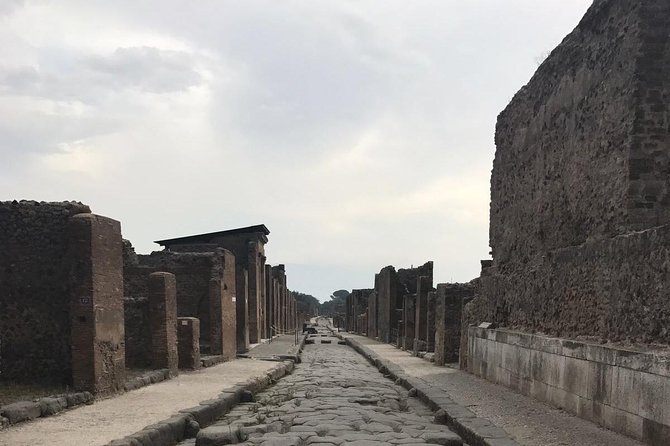
This is a small-group tour, with a maximum of 10 travelers. That size matters in Pompeii, where crowds can make it hard to hear explanations and hard to move with confidence. A smaller group gives your guide more room to adjust the pace and answer questions without turning it into chaos.
The name that matters here is Glauco Messina. In the experience feedback, Glauco is repeatedly praised for keeping teenagers engaged and tailoring facts to interests. That tells you something practical: you’re not going to get a one-size-fits-all lecture.
A good guide also helps you avoid the common problem of Pompeii tours becoming random lists of buildings. Instead, the walk becomes a narrative with transitions. You’ll be able to connect gymnasium and amphitheater to public life, tavern and thermopolium to daily routine, and the Forum to civic identity.
One more subtle benefit: with a small group, it’s easier to notice details without constantly squeezing through people. You’ll have more chance to look closely, pause, and keep your place in the story.
Price and tickets: where the value really is
The price is $254.07 per group for up to 8 people, and the tour is in English. At first glance, that can sound like a lot, but you should think of it as paying for guidance plus a structured route through Pompeii at a quieter time of day.
Here’s how I frame the value. A guided tour saves you from wandering without context, especially at Pompeii where the site is huge and the details can blur together. You’re also paying for time efficiency, because the afternoon slot aims to reduce the time lost to crowd management.
Important: admission tickets are not included. That means the real total cost is your ticket price plus this tour fee. If you’re traveling with a group, confirm how many people are in your booking so you know whether you’re getting the best per-person spread. The cap of 8 in a group booking structure can make the math reasonable if you’re splitting the cost.
Also note: you’re walking in the open air, so plan around comfort. The afternoon timing can make temperatures more pleasant, which is one of the main reasons this tour style works for many people.
Who this afternoon Pompeii tour suits best
This tour fits best if you want Pompeii with structure. You’ll see major stops like the Gymnasium, Amphitheater, Abundance road, Tavern, Thermopolium, Public Spa, and the Forum. That’s a strong mix if you care about both public and everyday life.
It’s also a good choice if you want a calmer visit. The afternoon timing is designed to be less crowded than earlier hours, and that makes it easier to hear explanations and move comfortably as a group.
If you’re traveling with teens, or you need a guide who can keep attention, this tour has a clear advantage. The feedback highlights how Glauco keeps young people engaged and adjusts the facts to what matters to them.
If you’re the type who wants long, slow time to wander, you might find the tour’s focus too tight. But as a “best-of” guided walk, it’s a very practical way to experience Pompeii without feeling swallowed by the day.
Should you book Ancient Pompeii in the afternoon?
I’d book this afternoon tour if you want a small-group guided route and you care about avoiding the morning crush. The 3:30 pm start is a real advantage in a place that can feel chaotic when it’s at peak. You also get a guide, Glauco Messina, who keeps the experience engaging rather than turning it into a recital.
I’d skip it only if you strongly prefer unguided wandering, or if you need a slower pace with extra time at each stop. Also factor in that tickets are not included, so budget for admission on top of the tour fee.
Overall, this is a smart way to see Pompeii’s most important areas in a shorter window, with better comfort and less crowd pressure than the early hours.
FAQ
How long is the Ancient Pompeii in the afternoon tour?
The tour lasts about 2 hours (approx.).
What time does the tour start?
The start time is 3:30 pm.
Where do we meet for the tour?
You meet at Piazza Immacolata, 80045 Pompei NA, Italy.
Where does the tour end?
The tour ends at Piazza Porta Marina, 80045 Pompei NA, Italy.
Is the tour in English?
Yes, it is offered in English.
Is admission included in the price?
No. Admission tickets are not included, and you’ll need to purchase your own.
How many people are in the group?
The tour has a maximum of 10 travelers.
Who is the guide for this experience?
The experience provider is Glauco Messina.
Is free cancellation available?
Yes. You can cancel for a full refund up to 24 hours before the experience’s start time.
More Tour Reviews in Pompeii
- Pompeii Small Group Tour with an Archaeologist★ 5.0 · 6,593 reviews
- Discover the Ancient Ruins of Pompeii: Day Trip from Rome★ 3.5 · 2,247 reviews
- Pompeii and Herculaneum Small Group Tour with an Archaeologist★ 5.0 · 1,350 reviews
- Skip the Line Guided Tour of Pompeii led by an Archaeologist★ 5.0 · 703 reviews
- Pompeii Ticket + Tour with Optional Tasting Experience at Pompeii★ 5.0 · 663 reviews