
REVIEW · SORRENTO
Exploring Pompeii
Pompeii hits hard, even in two hours. What makes this experience special is the way it strings together the daily life of a wealthy Roman town, including painted frescoes and mosaics, then lands on the sobering plaster casts from 79 AD. You get a clear, guided route through the Archaeological Park of Pompeii without trying to figure it all out yourself.
Two standouts: the tour’s guidance, with Francesco specifically praised for making the site click, and the focus on places a lot of self-guided visits skim over, like private residences and the thermal bath area. The other big win is that you see a range of Pompeii’s functions in one go, from homes and shops to temples, so you come away with a fuller sense of how the city worked.
One thing to plan for: admission tickets are not included in the tour price. Also, two hours is a good introduction, but it is not enough time to cover everything in Pompeii.
Quick highlights
- Private Roman residences with painted frescoes and original mosaics in a guided walkthrough
- A mix of everyday and important spaces, including Roman shops and the most important temples
- Thermal bath area stop, so you see leisure and routine, not just monuments
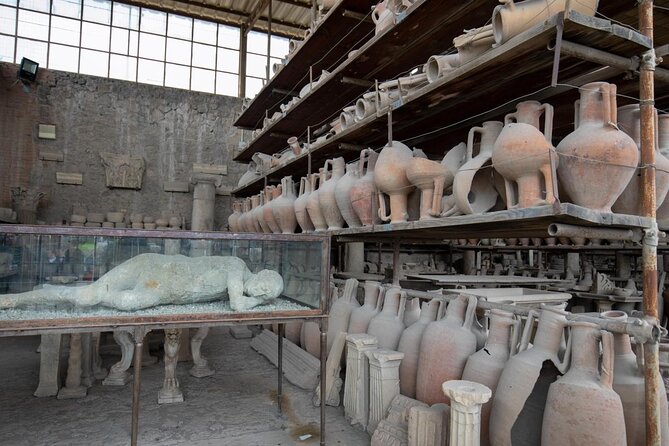
- Plaster casts of victims, a powerful reminder of the eruption of Vesuvius in 79 AD
- Private, English-language format with only your group participating
Pompeii, curated into a tight two-hour visit
Pompeii is one of those places that can swallow a whole day if you let it. This tour is built for people who want the impact fast, and for a price point that makes sense for a short, high-yield outing. In about two hours, you are guided through standout zones that help you understand the city instead of just taking photos.
I like that the route is not random. It is arranged so you move through a wealthy neighborhood, then through parts of the city that point to worship, commerce, and daily rhythm, and finally you reach the most emotional portion of the park. That pacing matters, because Pompeii is overwhelming if you hit everything in no particular order.
A private, English-language guide who keeps the site understandable
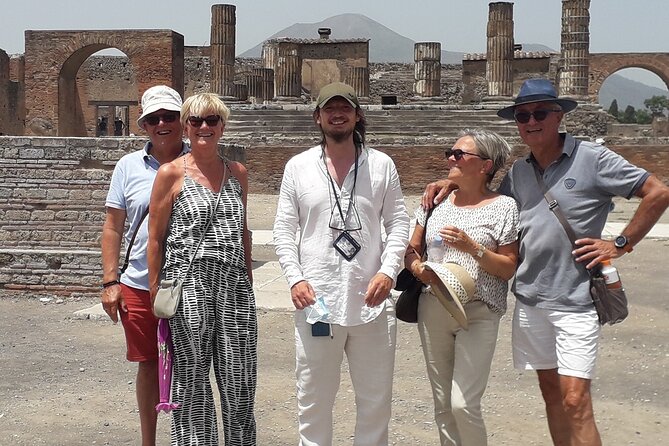
This is a private tour/activity with only your group, offered in English. That is a big deal at Pompeii because the park is large, and the details are the point. With a guide, you spend less time guessing what you are looking at and more time learning how the pieces fit together.
In the reviews, Francesco comes up as a key reason the experience felt better. The consistent theme is that the guide communicates clearly and adds useful context. You do not need a history degree. You just need someone to point out what matters and why.
Practical note: admission tickets to Pompeii are not included, so you should budget for park entry separately. This tour price covers the guided experience, not the entrance fee.
Stop: The Archaeological Park of Pompeii and the feel of Roman daily life
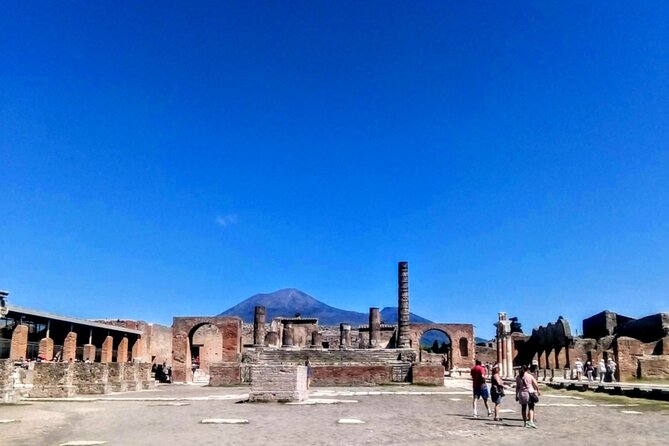
Your main, and basically sole, stop is the Archaeological Park of Pompeii. Think of this as a guided walk through the city’s preserved spaces, where you can connect what you see with how people lived.
What makes the park so gripping is that you are not looking at a single monument. You are walking through rooms, corridors, and public areas that once formed a real city. The tour leans into that by targeting areas that show wealth, work, worship, and routine.
Expect a tour that takes you from private domestic life into public and civic spaces. That shift helps you understand that Pompeii was not only temples and grand buildings. It was also shops, baths, and homes decorated down to the smallest surfaces.
Private residences, frescoes, and mosaics you can actually appreciate
The tour highlights magnificent private Roman residences, especially the painted frescoes and original mosaics. This is one of the best choices for a short visit. Frescoes and mosaics are easy to overlook if you only pass through rooms quickly, and they require a bit of explanation to read them as more than decoration.
Here is what you should look for while you are there:
- Fresco scenes and painted walls that show style, taste, and how residents wanted visitors to see them.
- Mosaic floors that can help you understand status and craftsmanship.
- The layout of rooms that hints at how space flowed for everyday use.
You will also likely spend time soaking in the contrast. Pompeii’s houses show comfort and culture, yet the city is now stuck in time. The guided framing helps that contrast land harder.
Roman shops and temples, the city’s everyday and sacred sides
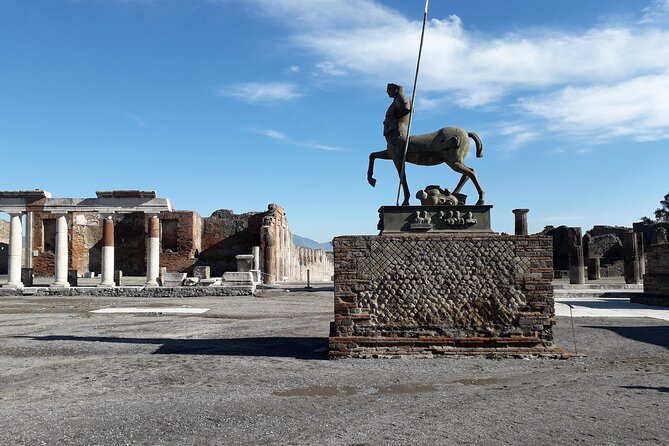
After the homes, the tour moves through several Roman shops and the most important temples. This is where you shift from private life to the civic and religious heartbeat of the town.
Shops give you a sense of practical life: commerce was a daily activity, and public areas brought people together. Temples, on the other hand, remind you that religion and ritual were woven into how the city functioned. Together, they help you understand Pompeii as more than a collection of ruins. It was a place where people worked, prayed, and socialized.
For a short tour, this combination is smart. You get both the functional pulse and the spiritual center, without needing to build your own route.
The thermal bath area: leisure and routine in the same place
The itinerary includes the thermal bath area. That matters because baths are one of the strongest ways to picture daily routine in Roman culture. You see how a city planned for hygiene, relaxation, and social time, all in one complex.
If you are deciding whether a bath stop is worth it, consider this: many first-time visitors go straight for the most dramatic sights. But baths help you imagine ordinary days. When you are trying to understand a whole city in a couple of hours, that kind of context is gold.
The plaster casts: Vesuvius, 79 AD, and what the ruins can never soften
At the end of the route, you reach the plaster casts of the victims’ bodies. This is the most intense stop. The tour frames it as a brutal reminder of the last moments of this great tragedy, tied to the eruption of Volcano Vesuvius in 79 AD.
I appreciate that this part is included, because it changes how you interpret everything else. The wealthy homes and decorated walls are still striking, but the emotional weight is different once you understand what happened. The guide’s job here is crucial, because people can feel overwhelmed. Clear explanation helps you stay present and respectful.
If you are sensitive to heavy subject matter, you can mentally prepare yourself before this point. Plan for a quiet minute after, so you are not rushing into photos and exit lines right away.
Price and tickets: what the $36.04 actually buys you
The price is $36.04 per person for an approximately two-hour private tour in English. That is a solid value when you look at what you are paying for: a focused route and an interpreter who helps you make sense of Pompeii’s details quickly.
But there is one essential catch. Admission tickets for Pompeii are not included. So your real cost is the tour price plus whatever the park entry fee ends up being for your date. This is one of those details that can cause disappointment if you only look at the headline number.
If you want the simplest planning, do this:
- Reserve the tour.
- Separately plan for your Pompeii entry tickets.
- Arrive ready to walk and follow the guide’s route for about two hours.
How to get the most from two hours in Pompeii
This tour is designed for moderate physical fitness, and you should assume it involves steady walking and time spent inside or near ruins. The exact pace depends on your group and what the guide points out, but you should treat it as an active outing, not a sit-and-watch experience.
A few practical ways to enjoy it more:
- Wear comfortable shoes. Pompeii is not the place for delicate footwear.
- Bring water. Even with a short tour, you can feel the sun and the pace.
- Give yourself time to find your meeting point calmly so you start relaxed.
If you tend to love details, this format will suit you because the guide helps translate what you see. If you are more of a big-picture person, the route still works because it covers key categories, like homes, shops, temples, baths, and the casts.
Who this Pompeii tour is best for
This is a good choice if you want:
- A guided introduction to Pompeii without spending a full day.
- A private group experience in English.
- A route that hits both daily life and the most historically significant, emotional stop.
It is also a good fit for couples and small groups who prefer not to fight crowds at the main highlights. If you are traveling with someone who gets lost easily in large sites, a planned path helps a lot.
If you are the type who likes to wander for hours with no structure, you might eventually feel limited. Two hours is efficient, not exhaustive. You can treat this as the foundation, then return later if you want to go deeper on your own.
Should you book Exploring Pompeii?
Yes, if your goal is a high-impact first look at Pompeii with a guide who can explain what you are seeing. The tour’s biggest strength is the pairing of visual details, like frescoes and mosaics in private homes, with context-rich stops like shops, temples, baths, and the plaster casts tied to 79 AD and Vesuvius. That mix makes the park feel like a living city rather than scattered ruins.
Do book it with your eyes open about tickets. You will need Pompeii admission separately, and the emotional weight of the plaster casts is real. If you are ready for that, you should leave with a stronger understanding and clearer memories than you would from simply walking the park alone.
FAQ
Is the Pompeii admission ticket included in this tour?
No. The tour includes the Exploring Pompeii experience, but Pompeii tickets are not included in the price.
How long is the Exploring Pompeii tour?
It runs for about 2 hours.
What language is the tour offered in?
The tour is offered in English.
Is this a private tour?
Yes. It is a private tour/activity, and only your group participates.
Do I need a certain fitness level to join?
You should have a moderate physical fitness level.
Are service animals allowed?
Yes, service animals are allowed.
Is the meeting area near public transportation?
Yes. It is near public transportation.
What is the cancellation policy?
You can cancel for a full refund up to 24 hours in advance of the experience start time. If you cancel less than 24 hours before, the amount paid is not refunded. The experience also requires a minimum number of travelers, and if it is canceled due to not meeting that minimum, you will be offered a different date or a full refund.
More Tour Reviews in Pompeii
- Pompeii Small Group Tour with an Archaeologist★ 5.0 · 6,593 reviews
- Discover the Ancient Ruins of Pompeii: Day Trip from Rome★ 3.5 · 2,247 reviews
- Pompeii and Herculaneum Small Group Tour with an Archaeologist★ 5.0 · 1,350 reviews
- Skip the Line Guided Tour of Pompeii led by an Archaeologist★ 5.0 · 703 reviews
- Pompeii Ticket + Tour with Optional Tasting Experience at Pompeii★ 5.0 · 663 reviews