
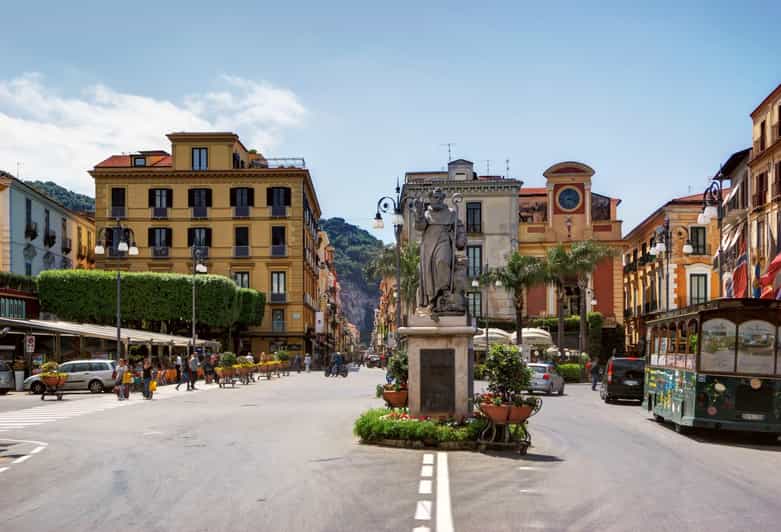
REVIEW · SORRENTO
Sorrento through the eyes of a local
Sorrento can feel like a postcard, until you slow down and follow a local route. This 2-hour walk focuses on old streets, real neighborhoods, and small details most visitors miss. I like that it is paced for you, with plenty of stops to take photos and ask questions along the way.
What I like most is the human side and the hands-on moments. Guides like Camilla (and sometimes Alessandra) bring the town to life with personal hints, plus you get a free limoncello and sweets break built into the walk.
One consideration: you will be on foot for a full 2 hours in tight historic lanes. If you move slowly or hate stairs, wear good shoes and plan to go at your pace with the guide.
Key highlights you will actually care about

- Free limoncello and local sweets during a planned tasting stop
- Pity Road as a real, narrow ancient street you can walk
- Sorrento inlay in a deconsecrated church, not just a photo opportunity
- The O’ Parruchiano garden and its famous Italian pergola, only visible to the walk group
- Viewpoints in town like Piazza della Vittoria and the Comunal Villa
- Cathedral and St Antonino cripta stops that add substance to the walk
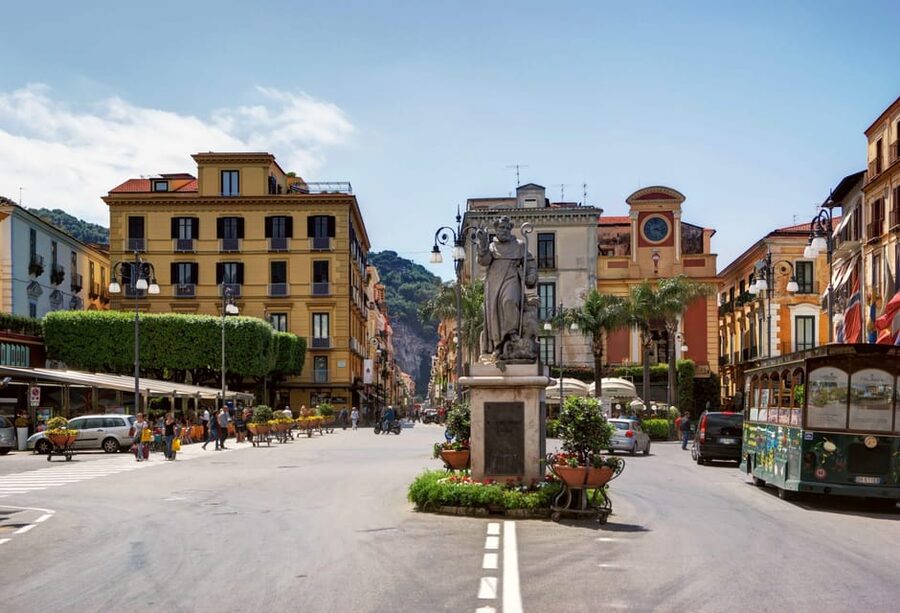
Enter Piazza Tasso with Torquato Tasso as your anchor
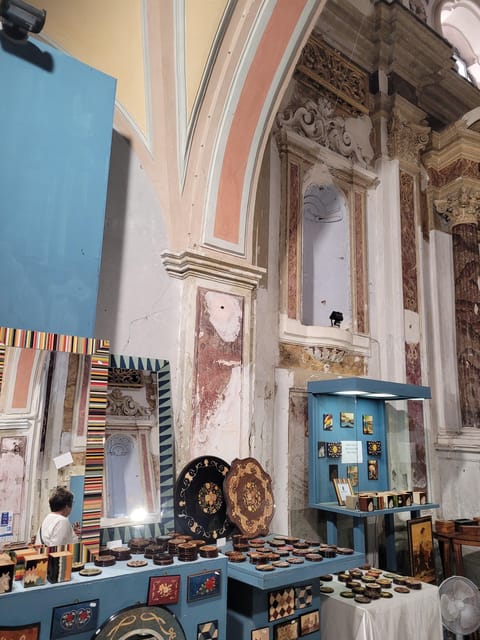
You start at a place Sorrento locals use to orient themselves: Piazza Tasso, right in front of the statue of Torquato Tasso. The meeting spot is simple to find, directly on the right of Bar Fauno, which matters when you are arriving in the middle of the day.
The guide sets the tone right away, explaining what makes the main plaza feel the way it does, and why Tasso is more than a name on a sign. You’ll get a quick framework for reading Sorrento, so later streets feel connected instead of random.
Piazza Tasso to Pity Road, from open square to tiny lanes
From the plaza, the walk narrows fast, and that shift is part of the charm. You head toward the Pity Road, an ancient and extremely narrow street where carriages once passed in earlier ages. Standing on it, you feel how the town grew inward, not outward.
This is where the local approach shows. Instead of just pointing at walls, the guide gives you reasons to look: how Sorrento’s old layout shapes movement, where the street’s tightness forces you to slow down, and how that affects daily life even today. If you like walking tours that teach you how to notice things, this section is a good match.
Sorrento inlay craft inside an old deconsecrated church
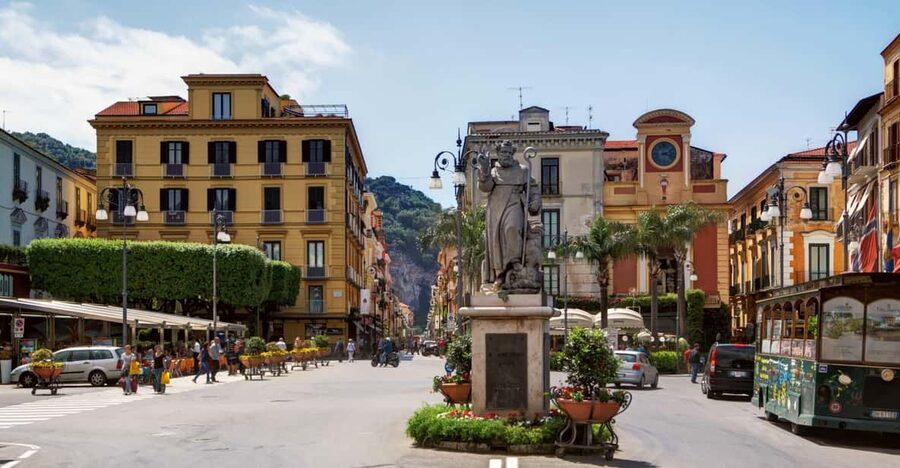
Next up is the kind of stop that makes a walking tour worth the money. You see how Sorrento inlay is made in an old deconsecrated church. That matters because it changes how you understand the craft. You are not just watching a demo, you’re seeing a traditional art in a setting that already carries history.
You’ll likely spend a few minutes learning what to look for in the work, how it differs from mass-produced souvenirs, and why Sorrento became known for this style. If you enjoy design details, this stop gives you a new filter for the town, not just entertainment.
Sorrento Cathedral and the nativity from the 800s
Then you shift from craft to sacred art inside Sorrento Cathedral. One highlight is a nativity located within the church, dated from the 800s. The timing here is useful for your visit, because it helps you understand what you are seeing without needing to guess.
Even if churches are not your main interest, this stop adds balance to the tour. Sorrento is famous for views, but it also has layers of devotion and tradition that explain why certain corners of town feel calmer. Expect the guide to point out what’s worth your attention before you move on.
O’ Parruchiano garden walk and the Italian pergola

One of the best value parts of this tour is also the most literal. You get a special walk in a garden inside the O’ Parruchiano restaurant. If you are not a guest, you usually would not see this space, so it feels like a genuine access moment rather than a marketing claim.
The garden centers on the famous Italian pergola. You will have a chance to view it as more than a decorative element, because it works like a shade structure shaped by local habits of eating and socializing outdoors. This stop is also a mood change. One moment you are in old streets, the next you are in a quieter pocket where the town slows down.
Villa Fiorentino outside, with art tied to big names
You then get a peek at Villa Fiorentino from the outside. The building is used for art exhibitions, and it has hosted famous paintings by artists such as Dalì and Picasso. Since you are seeing it from outside during the walk, you do not need to worry about timing inside an exhibition room, but you still get the context.
This is one of those stops that helps you understand Sorrento beyond the scenery. The guide connects the town’s identity to culture and art spaces, so you walk away thinking of Sorrento as more than a coastal backdrop.
Sedil Dominova, where people gathered in the heart of town
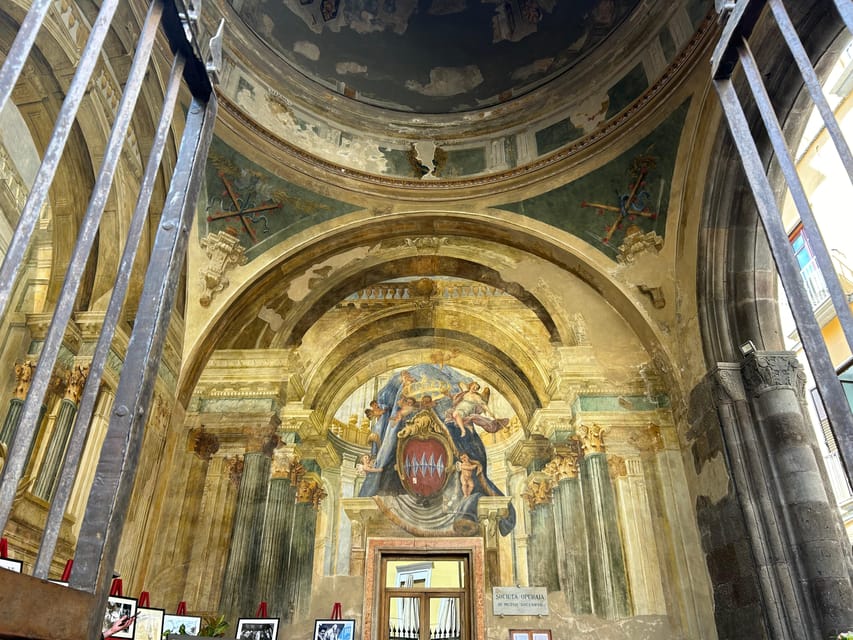
In the middle of Sorrento, you visit the Sedil Dominova, an old meeting point. This is a strong stop for anyone who likes the social history of towns. A place like this shows you how communities once organized themselves in public, and why central points mattered.
Even without long explanations, you can feel why it works as a stop. It is the kind of spot that helps you reset, breathe, and orient yourself before the next string of sights.
Free limoncello and local sweets, then Piazza della Vittoria panoramas
After all the walking and looking, the tour builds in a break that is both practical and fun. You head to a spot in town where you can try local and famous Sorrento limoncello, plus you get local sweets as part of the included tasting.
This is also where the local hints pay off. When a guide has real affection for their town, they tend to tell you what to expect from the flavor profile, how it is typically served, and what kind of sweet pairing works best. It is a small thing, but it turns a tasting into a mini lesson.
Next you go to Piazza della Vittoria for views. The goal here is simple: you get a panorama that helps you read where you are, and it ties the walk back to the coast. If you enjoy taking photos, this stop is one of your best opportunities to get context shots, not just close-ups.
Cloister of St Francis and modern graffiti art
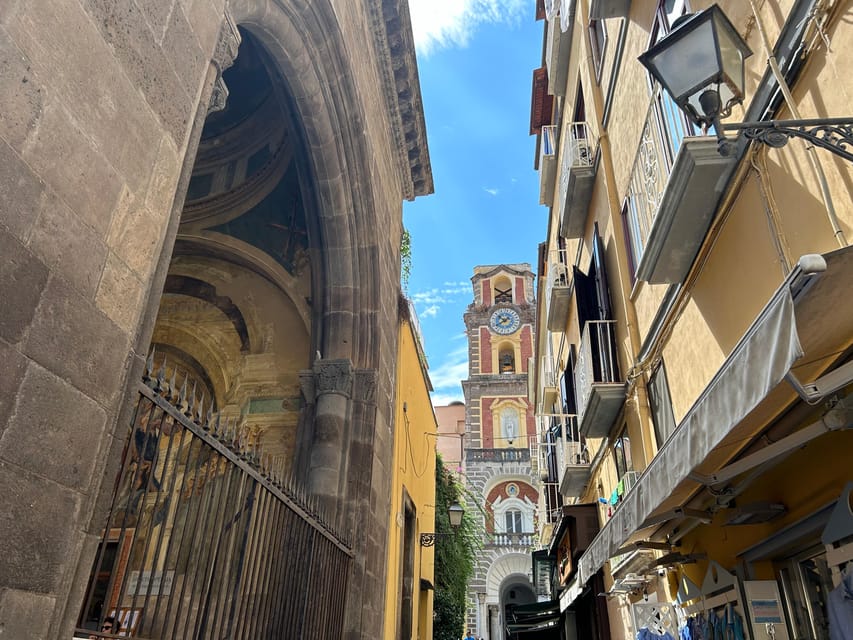
After the viewpoint, you reach the cloister of St. Francis. Here you’ll see modern graffiti art from a famous singer. It’s a surprising contrast in a good way, because it shows how Sorrento blends old religious space with contemporary street expression.
This stop tends to create great photo moments, especially if you like mixing eras in the same frame. The guide’s job is to help you see what you’re looking at without turning it into a debate. You just get to appreciate the shift in mood.
Comunal Villa viewpoint over the whole Sorrento coast
Then comes the Comunal Villa, another high point where you can look out over the whole Sorrento coast. This part of the walk is valuable because it helps you connect the dots between where you just wandered and where the sea sits in relation to the town.
It also works as a pacing tool. If your legs start to feel heavy, a viewpoint stop gives you a chance to rest without ending the tour too early. You get to recharge while still moving forward.
St Antonino church and the cripta stop that adds depth
As the tour continues, you visit St Antonino church and then see the cripta. This is the kind of stop that adds real weight to the experience. Instead of keeping everything at street level, you get access to a quieter, more layered side of Sorrento.
I like cripta stops because they shift your understanding from postcard to place. Sorrento becomes not just a destination you pass through, but a town with built-in continuity. The guide helps you make sense of what you are seeing so you are not just looking around wondering what matters.
Mills Valley finale, and why the ending matters
The walk finishes in the Mills Valley area. The tour wraps up here with a goodbye, which is practical because it puts you in a spot where you can continue your day without feeling like you are back where you started.
I also like that the ending location gives the tour a feeling of closure. You did the old center, you worked upward and outward to viewpoints, then you ended in a more local, specific pocket of the town.
What you get for the $30 price and 2 hours
At $30 per person for a 2-hour guided walk, the value is in what is included, not the sticker price. You are paying for a guide who connects stories to specific places, plus you get free limoncello and sweets, and you also get access to the O’ Parruchiano garden.
The tour also includes moments that are hard to replicate on your own without local context. Walking the Pity Road with an explanation, seeing Sorrento inlay craft in a deconsecrated church, and visiting the cathedral nativity and the cripta are all “quality of attention” items. You can wander Sorrento independently, but you usually will not get the same level of meaning per stop.
Pace matters too. Reviews often mention that the walking rhythm feels comfortable, never rushed. That fits the overall goal of the tour: Sorrento through the eyes of a local, not a checklist sprint.
Who this tour fits best
This is a great choice if you want:
- A compact way to learn Sorrento without cramming all day
- Craft and culture stops, not only viewpoints
- A guide who can share personal hints and legends tied to places
- A guaranteed break with limoncello and local sweets
It is also a solid pick for couples and solo travelers because the route moves you through the town’s core while still giving you chances to pause and talk. If your travel style is “slow look, good questions,” you will probably enjoy it.
If you are short on time and only want the absolute top views with minimal walking, you might find this tour a bit more focused on streets and interiors than you expected. But if you like variety, the mix of plaza, narrow lanes, craft, churches, garden, and viewpoints makes the 2 hours feel full.
Should you book this Sorrento local-walk tour?
Yes, if you want a thoughtful walk that blends street life, craft, churches, and viewpoints, plus a free tasting that feels earned. The price makes sense because it includes more than a guide, it includes access to specific spaces and a taste of local flavors.
Before you book, do check your comfort level with walking in the historic center. Tight lanes and old-town steps can be tough for some people, even on a wheelchair-friendly listing. If that is a concern, send a message ahead of time and let the guide know what pace works for you.
If you want Sorrento to feel like a place people actually live in, this is the kind of tour that helps you get there quickly.
FAQ
Where do I meet the tour guide?
You meet right in front of the Torquato Tasso statue in Piazza Tasso, near Bar Fauno.
How long is the walking tour?
The tour lasts 2 hours.
Is the tour guided in English?
Yes, the live tour guide speaks English.
Is limoncello included?
Yes. You can try local Sorrento limoncello, and local sweets are included as a free tasting.
Is the tour wheelchair accessible?
It is listed as wheelchair accessible.
What is the cancellation policy?
You can cancel up to 24 hours in advance for a full refund.
Do I have to pay right away?
You can reserve now and pay later, so you can keep plans flexible.
More Tour Reviews in Sorrento
- Sorrento: Exclusive Capri Boat Tour and Optional Blue Grotto★ 4.8 · 3,170 reviews
- Sorrento Farm and Food Experience including Olive Oil, Limoncello, Wine tasting★ 5.0 · 2,524 reviews
- Capri Blue Grotto Small-Group Boat Day Tour From Sorrento★ 4.5 · 2,511 reviews
- From Sorrento/Nerano: Amalfi and Positano Boat Tour★ 4.6 · 2,440 reviews
- Day Trip to Positano, Amalfi & Ravello from Sorrento★ 4.5 · 2,371 reviews