
REVIEW · SORRENTO WINE EXPERIENCES
Pompeii, Herculaneum and Winery on Vesuvius with an Archaeologist
This day trip is a history lesson you can walk through. You will spend the morning and afternoon in Pompeii and Herculaneum with archaeologist Fabrizio Bellini, then unwind at Cantina del Vesuvio in Vesuvius National Park for lunch and tastings.
What I love most is the private pacing that keeps you from feeling herded, and the way Fabrizio connects the ruins to real Roman life, site by site. A smart consideration: it is a very full 8 to 9 hour day, with uneven stone underfoot and heat, so bring a moderate-level walking mindset.
Key Highlights You Will Feel the Moment You Arrive
- Fabrizio Bellini, an archaeologist guide with decades in Pompeii and fluent English
- Private, flexible route that adapts to your group and helps you avoid the worst crowds
- Pompeii hits like Porta Marina, Temple of Apollo, the Forum, Casa dei Vettii, and Teatro Grande
- Herculaneum contrasts sharply with superbly preserved villas, mosaics, and organic finds
- Winery lunch at Cantina del Vesuvio in Vesuvius National Park, with guided vineyard walk and tastings
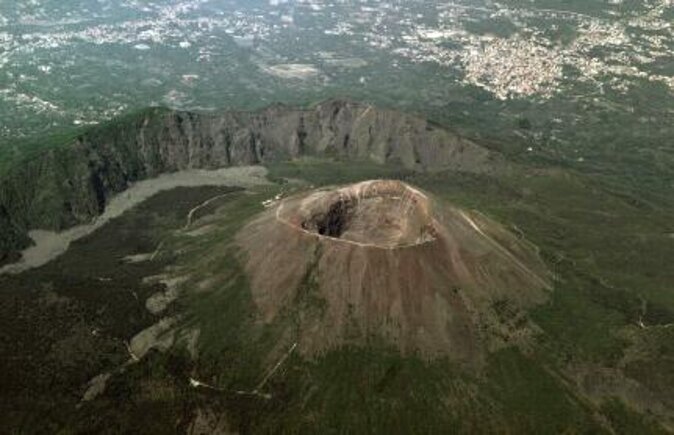
- No Mt. Vesuvius summit drive (you get views, not a hike to the crater top)
Pompeii and Herculaneum With a Real Expert, Not a Map and a Prayer
If you have ever tried to do Pompeii on your own, you know the problem fast. You see walls, columns, and floors, but your brain needs the “why.” With this private tour, Fabrizio takes the chaos out of it. He’s been guiding Pompeii for 27 years and works like a teacher, pointing out what matters and why it mattered to everyday Romans.
This is also a practical setup. It is a private day trip for up to 7 people, with air-conditioned transport, water and Wi-Fi onboard, and guided time inside both sites. English is offered, and there is pickup anywhere in the Naples or Sorrento area. If you are on the Amalfi Coast, you just need to ask in advance since the pickup plan changes.
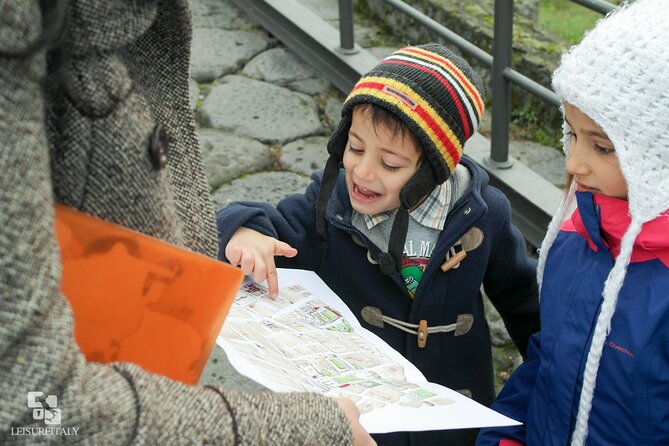
One more detail I like: the tour is designed to be family-friendly if you opt for the upgrade. That matters because Pompeii and Herculaneum can feel long for kids unless someone actively turns it into a story.
Price and Logistics: What You Pay for, and What You Should Budget
The headline cost is $861.07 per group (up to 7) for the tour. That base price covers the guided experience and the private logistics: transportation and the private guided tours in Pompeii and Herculaneum.
Then budget for the parts you pay separately:
- Admission fees: about €40 per adult for both sites. Under 18 can be free with valid ID.
- Winery lunch and wine tasting at Cantina del Vesuvio: about €50 per person all inclusive, or €60 if you choose the superior wine upgrade.
Here is why this can still feel like good value. You are paying for a guide who can compress two huge archaeological parks into one coherent day, while also managing crowds and pacing. For small groups, that beats spending the day playing museum detective.
Also, the tour does not reach the top of Mount Vesuvius. You do get winery views of the volcano and bay, but you are not signing up for a crater hike.
Beginning in Pompeii: Porta Marina Sets the Tone
Pompeii is huge, so your first job is to get your bearings. The tour starts at Piazza Porta Marina, a modern gateway that matches Pompeii’s ancient entrance. You walk through the feeling of transition, from today into a city that once ran on foot traffic, shops, public speeches, and daily markets.
From there you move into the core early highlights:
- Temple of Apollo: You stand in an open-air sacred space with a view toward Mount Vesuvius. The tour points out the 48 surrounding columns and the story of how religious practice evolved from Greek to Roman styles. You also get replicas and details like a sundial element, which makes the site easier to picture.
- Forum of Pompeii: This is the political, religious, and commercial heart. You walk across original travertine paving and see major buildings framed by Vesuvius in the distance. The Forum also lets you visualize daily commerce at places like the market area and the official weighing table.
A drawback to consider with Pompeii: crowds can build, especially later in the day. The good news is that your guide can adjust the route and pace so you spend more time learning and less time stuck in slow lines.
Casa dei Vettii and Casti Amanti: When Frescos Become Real Life
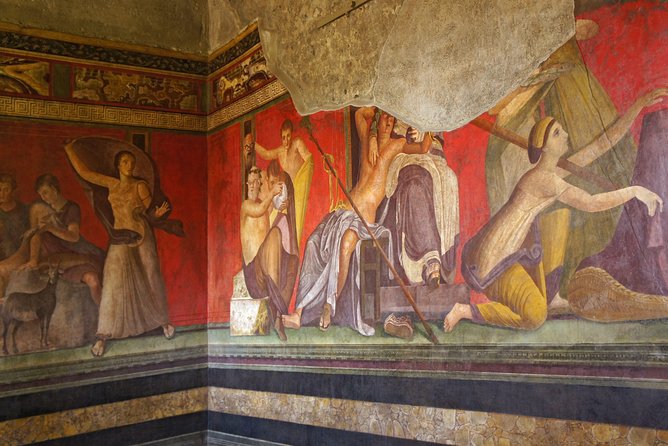
This is where Pompeii turns from ruins into personality. At Casa dei Vettii, you get one of the most famous houses in Pompeii, with frescoes that are famously vivid even after 2,000 years. The big appeal here is the sense of wealth and message. The tour focuses on what you see and what it meant, including the protective painting of Priapus at the entrance and the luxury-style murals inside.
Another standout is the peristyle garden, where the restored space helps you understand how elite Roman homes used outdoor areas. You are not just looking at paintings on a wall. You are learning how rooms, gardens, and status signals worked together.
Then you go to Insula dei Casti Amanti on Via dell’Abbondanza. This is a newer-feeling stop because of the reopened elevated walkway system that lets you look down into an active excavation block. It gives you a bird’s-eye angle on the city block, including homes and a bakery. You also get a famous tender fresco of a couple’s kiss, plus unusual details like charcoal sketches of gladiators drawn by children almost 2,000 years ago.
If you care about how archaeology happens, this stop is a treat. You see excavations rather than only finished gallery rooms.
Teatro Grande and the Antiquarium di Pompei: The Culture Behind the Stones
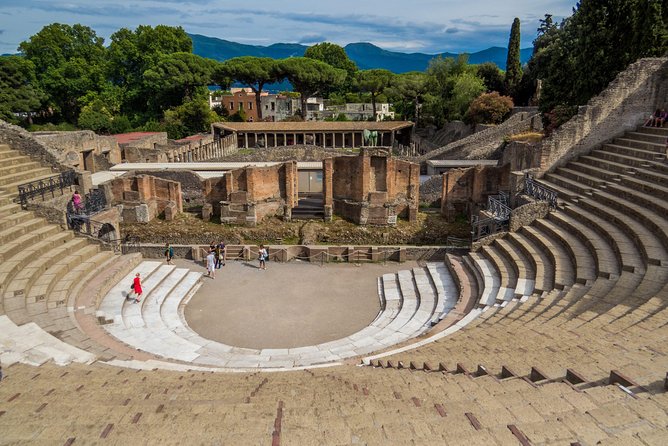
Pompeii also needs social context. The tour visits Teatro Grande, one of the earliest stone theaters, dating to the 2nd century BC. You sit in tiers and see how seating reflected hierarchy, with elite marble seats below sections for common people. It is also famous for acoustics, and the guide uses that to help you feel how performances would have spread through the space.
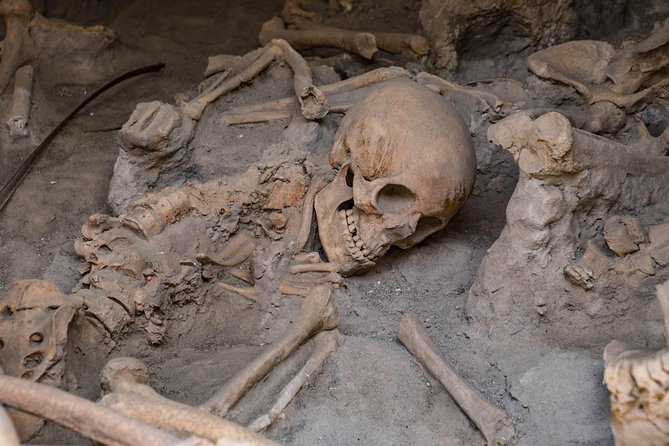
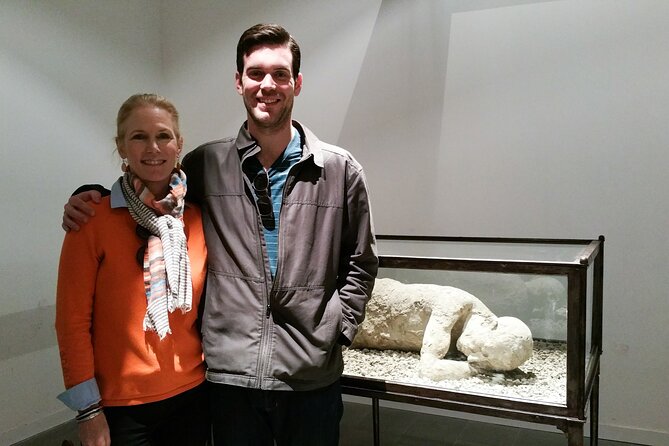
Then you shift into emotion and explanation at the Antiquarium di Pompei at Porta Marina. This modern museum is not just “extras.” It prepares you for what you are looking at outdoors. The most striking part is the plaster cast gallery, which captures victims and even a guard dog, putting faces and final moments behind the ruins. Digital displays and fresh finds help connect the story to ongoing archaeological work.
For many people, this is the moment the day stops being sightseeing and becomes understanding.
Switching to Herculaneum: Why It Feels More Personal Than Pompeii
If Pompeii is loud and spread out, Herculaneum is different. The tour uses the Archaeological Park of Herculaneum to show you opulent villas and well-preserved artifacts, and it is the city where preservation conditions make a big emotional difference.
You still see architecture and mosaics, but the effect is more intimate. The volcanic mud helped preserve delicate organic materials, which means you get a clearer view into daily objects and how Romans actually lived.
This is also where your guide’s pacing matters most. You cover many stops, but Fabrizio keeps it readable, checking in about energy and adjusting when needed, especially during hot hours.
Herculaneum’s Must-See Stops: Museums, Boats, Beach, and Shops
Herculaneum is full of highlights, but a few feel like they belong in their own category:
Antiquarium di Ercolano
This museum shows the finest, most fragile pieces and helps you understand what you are about to see outside. You can encounter organic-preservation stories, like carbonized wood and textiles, plus the famous Herculaneum Treasure found with victims near the shoreline.
Boat Pavilion
This stop makes the tragedy physical. You see the carbonized keel of a 9-meter boat found upturned near the shoreline, plus smaller maritime artifacts like fishing weights, nets, and a carbonized rope. It is hard to look at, in a good way. It turns “history” into a real place where people tried to survive by sea.
Ancient Beach of Herculaneum
The beach reopened to the public in 2024 after restoration. You walk a portion of the original shoreline and can look up at boat shed arches. You also see how the volcanic layers reshaped the landscape, with the beach several meters below modern ground level. It gives you a strong sense of the final escape attempts and the eruption’s force.
Casa dei Cervi (House of the Stags)
A villa built for views and breezes, with an inverted layout and named for expressive marble stag statues found in its garden.
Casa di Nettuno e Anfitrite
This is a standout mosaic house, with a vibrant wall mosaic showing gods in gold and blue glass paste. You also see an outdoor summer dining room decorated with shells and lava stone, plus an attached shop described as one of the best-preserved grocery stores from antiquity. The tour points out original wooden shelves and carbonized storage bins.
Women’s Baths (Terme Femminili)
This site is unexpectedly detailed. You see a black-and-white mosaic in the apodyterium and then move through the heating sequence, including a hollow-wall heating system. It is a rare place where you can picture women’s daily routines and privacy in a wealthy Roman seaside town.
Palestra (Gymnasium)
This is civic pride in stone and water. You see a massive complex with a cross-shaped pool and a hydra-shaped fountain. The tour also highlights preserved wood finds like a carbonized statue of a benefactor, which adds an eerie, human scale.
Ad Cucumas, ancient wine advertisement
A quick stop that gives you a “Roman ads were a thing” moment. It is brief, but it changes how you see the city.
Lunch at Cantina del Vesuvio: Views, Vineyards, and Lacryma Christi
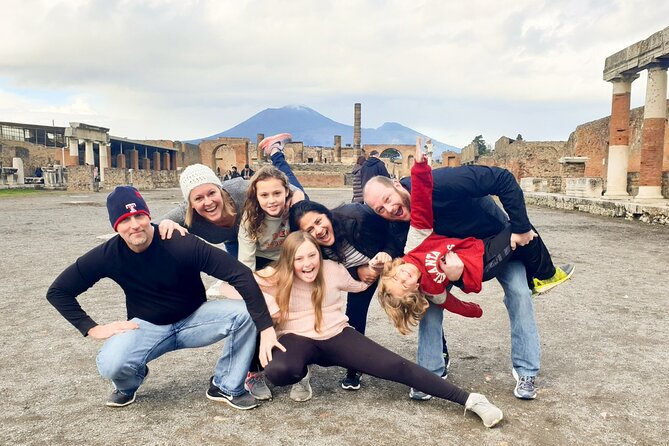
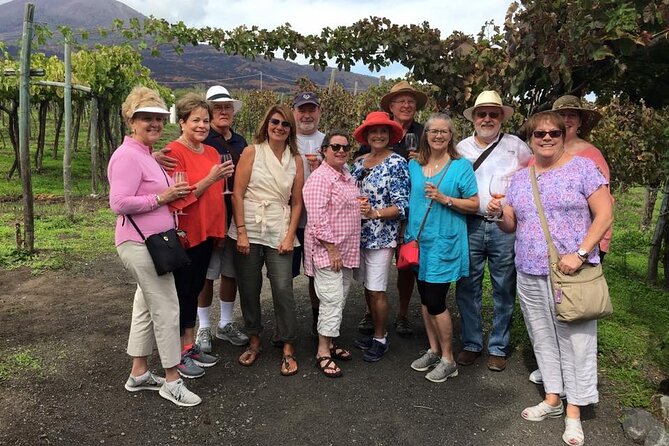
Between the ruins, you need real food and a break from uneven walking. The tour stops at Cantina del Vesuvio, an organic winery inside Vesuvius National Park, run by the Russo family since 1930.
What you do here is well paced:
- Start with a guided 15-minute stroll through the vineyards
- Learn about Lacryma Christi wines, tied to the volcanic terroir
- Then you enjoy a set menu lunch paired with five local wines
The menu described includes appetizers like bruschetta, cheeses, and cured meats, plus spaghetti with Vesuvius cherry tomatoes and meatballs. Dessert is Pastiera, with vegetarian and gluten-free options available.
This is not a quick glass and out. It is a full reset before you tackle the final stretch in Herculaneum. The view setup also helps: you eat with Vesuvius behind you, and the bay in front.
And if wine shopping is your thing, the winery visit includes options to ship wines and olive oils home.
Practical Tips for a Full Day Under Roman Sun
Even with a great guide, the physical reality is real: Pompeii and Herculaneum involve uneven surfaces, stairs, and lots of walking. The tour recommends moderate physical fitness, which feels right for this program.
Here’s what will help:
- Wear shoes with good grip. Uneven stones are part of the deal.
- Bring water habits. You get water onboard, but you’ll still want to sip during breaks.
- Plan for heat. Fabrizio checks in and can tailor the pace, but you should still expect hot conditions.
- Take breaks strategically. The day is built with short transitions, like stepping through Porta Marina before you hit the Forum, then museum stops like the Antiquarium di Pompei.
- Ask your guide about order if crowds matter. The itinerary is described as flexible, and in practice you can often optimize the day based on weather and crowd patterns.
One more smart move: tell Fabrizio what you care about most, architecture versus mosaics versus daily life versus archaeology itself. He can steer you toward the right moments and adjust what gets cut if your group needs a slower pace.
Should You Book This Private Pompeii and Herculaneum + Winery Tour?
I think this is an easy yes if you want more than a photo walk. Pompeii and Herculaneum can swallow a whole trip if you do them without context. With Fabrizio guiding, you get structure, explanation, and flexibility in a single day.
Book it if:
- You want a private experience for up to 7 people with pickup from Naples or Sorrento
- You like seeing the big “iconic” stops and also the smaller details that make the sites click
- You want lunch that is actually part of the day, at a winery in Vesuvius National Park
Skip it, or choose a simpler day, if:
- You are looking for a slow-paced, low-walking itinerary
- You do not want museum time or prepared explanations
- You are hoping for a Mt. Vesuvius summit hike, because this one stops short of the top
If you are doing Southern Italy and only get one shot at this volcanic-silent world, this private archaeologist day trip is a strong use of your time.
FAQ
How long is the Pompeii, Herculaneum, and winery day trip?
Expect about 8 to 9 hours total, depending on how your guide adapts the pacing and the time you spend at each stop.
What is included in the tour price, and what costs extra?
The tour includes air-conditioned vehicle transport, water and Wi-Fi onboard, private guided time in Pompeii and Herculaneum, and private transportation. Admission fees for the archaeological sites (about €40 per adult) and the winery lunch and wine tasting cost are not included.
Does the tour include visiting the top of Mount Vesuvius?
No. The tour does not reach the top of Mt. Vesuvius. The winery visit provides views, but you do not go up to the crater top.
Where can the guide pick you up?
Pickup is offered anywhere in the Naples or Sorrento area. If you are staying on the Amalfi Coast, you should contact the operator to coordinate pickup.
Is this tour family-friendly?
There is an upgrade described as family-friendly designed to entertain children, and the tour is offered with a moderate physical fitness level.
What if I need to cancel?
You can cancel for free up to 24 hours in advance for a full refund. If you cancel less than 24 hours before the start time, the amount paid is not refunded.
More Days in Herculaneum
- Guided Day Tour of Pompeii and Herculaneum with Light Lunch★ 4.5 · 311 reviews
- Sorrento: Pompeii & Herculaneum Tour with Skip-the-Line★ 4.6 · 125 reviews
- Herculaneum: 2-Hour Skip-the-Line Tour from Sorrento★ 4.0 · 46 reviews
- Pompeii & Herculaneum – Skip the line from Sorrento★ 4.5 · 44 reviews
- From Sorrento: Half-Day Tour of Herculaneum★ 4.6 · 39 reviews
Campania by the Glass
- Sorrento Farm and Food Experience including Olive Oil, Limoncello, Wine tasting★ 5.0 · 2,524 reviews
- E-Bike Food and Wine Tour in the Sorrento Peninsula★ 5.0 · 271 reviews
- Sorrento Food & Wine Tour – ‘Taste of Sorrento’★ 5.0 · 108 reviews
- From Sorrento: Full-Day Pompeii & Wine Tasting Tour★ 4.8 · 77 reviews
- Pompeii, Mt Vesuvius and Wine Tour★ 5.0 · 77 reviews
Up the Volcano from Sorrento
- Priority Access Pompeii & Mt. Vesuvius Full day from Sorrento★ 4.5 · 1,376 reviews
- From Sorrento: Pompeii and Vesuvius Guided Tour with Lunch★ 4.8 · 683 reviews
- From Sorrento: Day Tour to Pompeii Ruins and Mount Vesuvius★ 4.3 · 489 reviews
- From Sorrento: Pompeii and Vesuvius Tour★ 4.5 · 201 reviews
- Mt Vesuvius and Pompeii Tour by Bus from Sorrento★ 4.5 · 170 reviews
More ways into Sorrento Wine Experiences.
 ★ 5.0Sorrento Farm and Food Experience including Olive Oil, Limoncello, Wine tastingFrom $1142,524 reviews
 ★ 4.5Naples: Pompeii and Mt. Vesuvius with Lunch and Wine TastingFrom $1412,454 reviews
 ★ 5.0Pompeii Tour & Lunch with Wine Tasting ExperienceFrom $120383 reviews
 ★ 5.0Pompeii Vineyard Escape: Private Wine Tasting & LunchFrom $66329 reviews
 ★ 5.0E-Bike Food and Wine Tour in the Sorrento PeninsulaFrom $131271 reviews
 ★ 4.8Mount Vesuvius: Vineyard Tour with Wine Tasting and LunchFrom $65193 reviews
 ★ 4.6Pompeii: Archeological Tour & Wine Tasting at Mt. VesuviusFrom $135142 reviews
 ★ 5.0Genuine Home Cooking Class + Wine TastingFrom $181122 reviews
Other useful routes from here